From FedEx drop box to private room: inside the rebuild
Our first 25 pods start life as retired courier kiosks. This is what happens to every one.
Every POD ON ME in the first fleet was once a FedEx drop-off kiosk: a walk-in steel box built to stand outside and take abuse from weather and the public for years. When they were retired, most kiosks like these would have been scrapped. We have 25 of them, and each one is becoming a private room.
Why start with a used shell
A good enclosure is the hardest part of a pod to get right. It has to be strong, weatherproof, the right size for a person and a desk, and able to survive in public. The kiosks already are all of that. Starting from a sound steel shell means we spend our budget on what the customer feels: the acoustics, the air, the glass, the desk and the door.
Same footprint, completely new inside
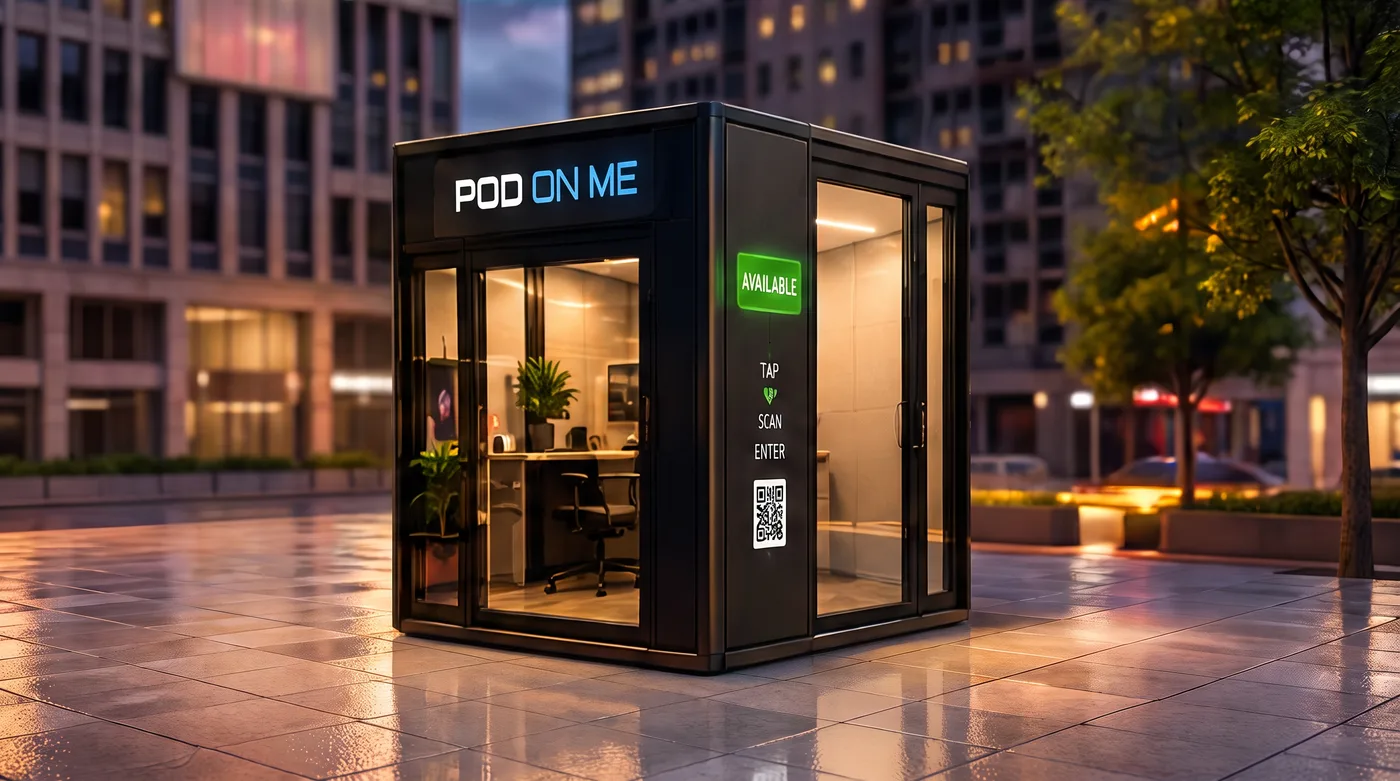
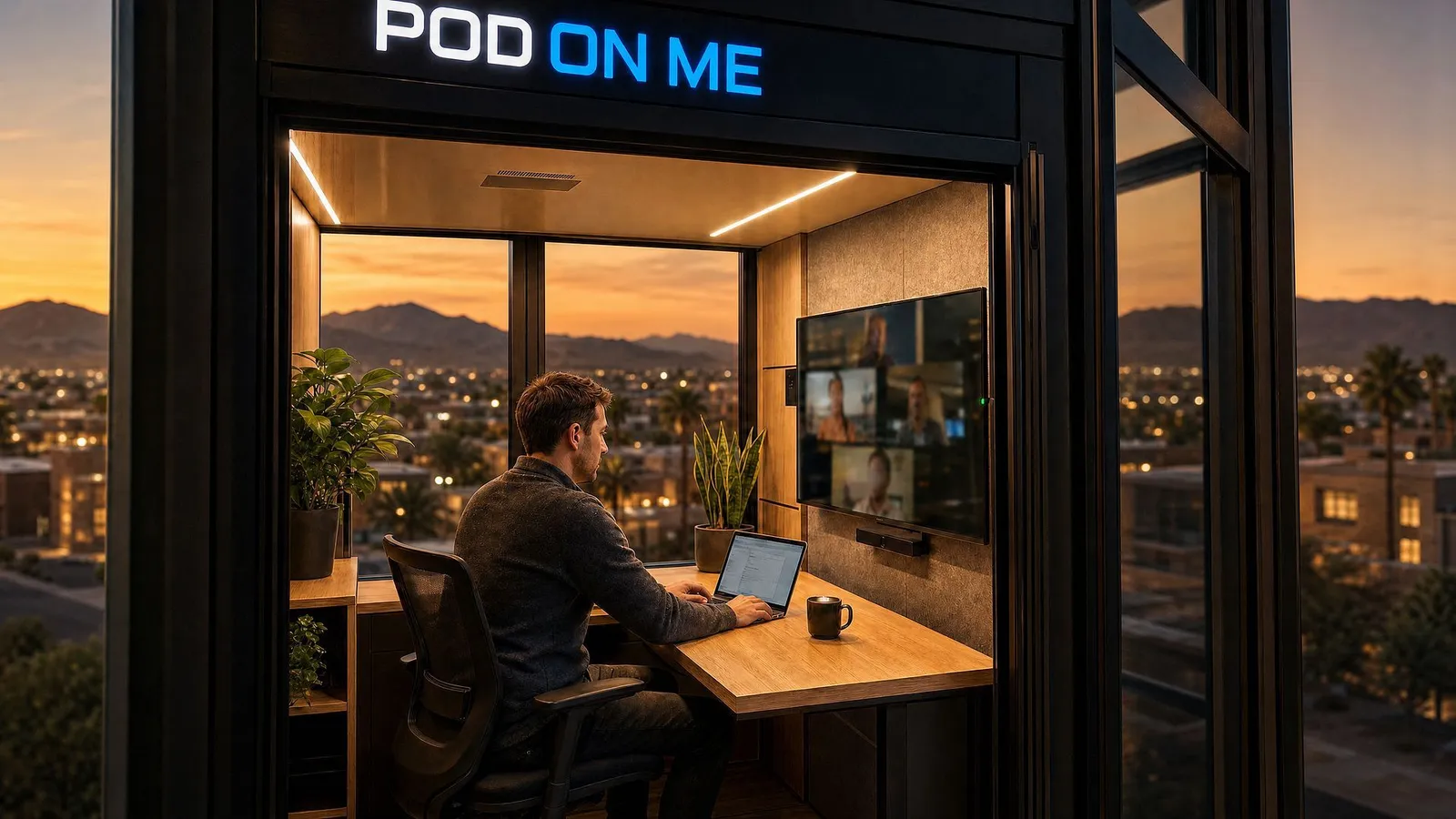
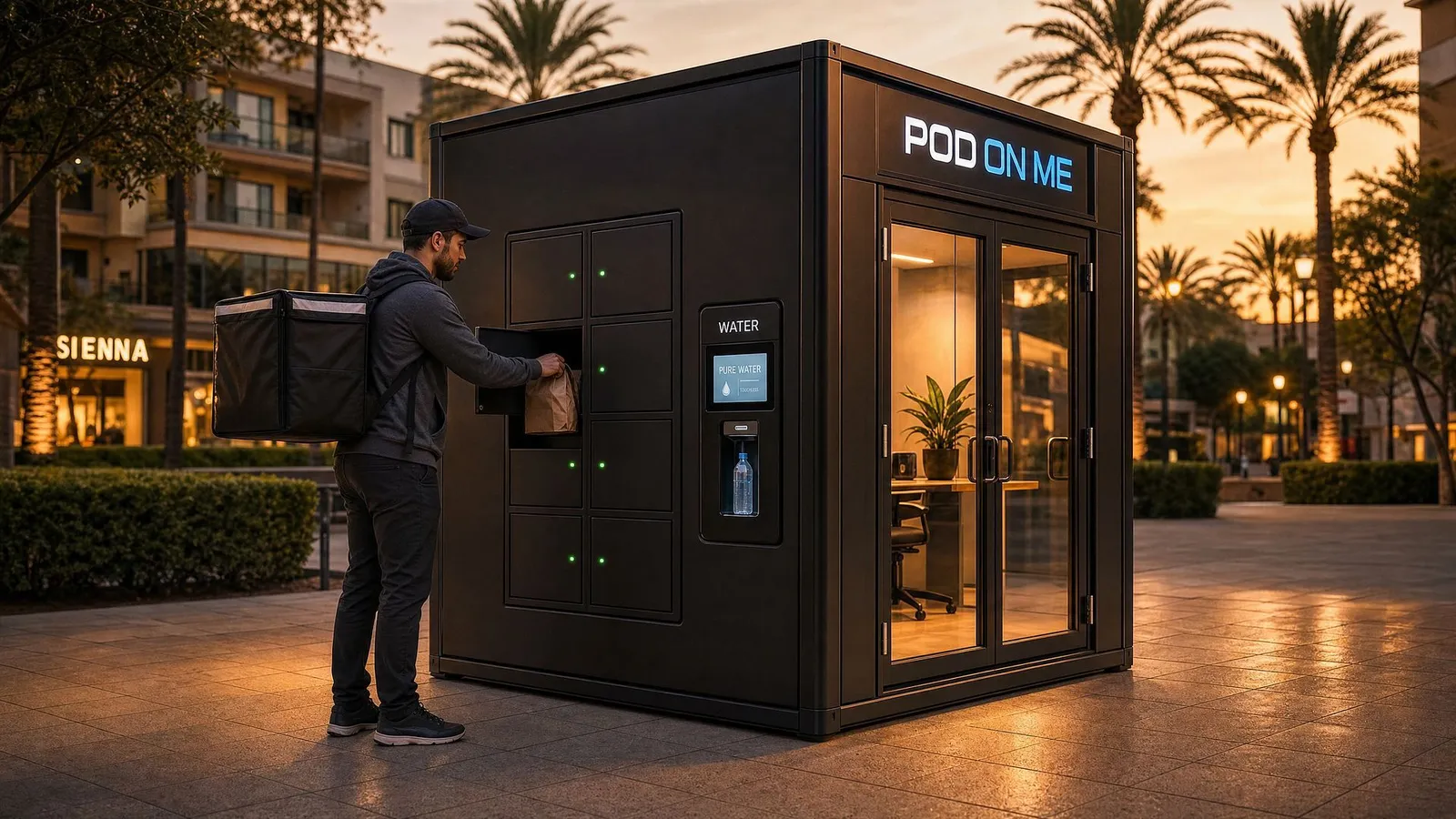
Each kiosk is stripped to the frame. Rust, seams and the roof are repaired, and the outside is re-skinned in charcoal metal with lit edges, so the finished pod keeps the kiosk's compact, boxy footprint and height and does not look like a shipping container. Inside, an acoustic shell goes in, followed by tinted impact-rated glass, a commercial door, blackout blinds, air conditioning with fresh-air exchange, a desk and display, the mini water unit and the delivery lockers on the outside wall.
The brains
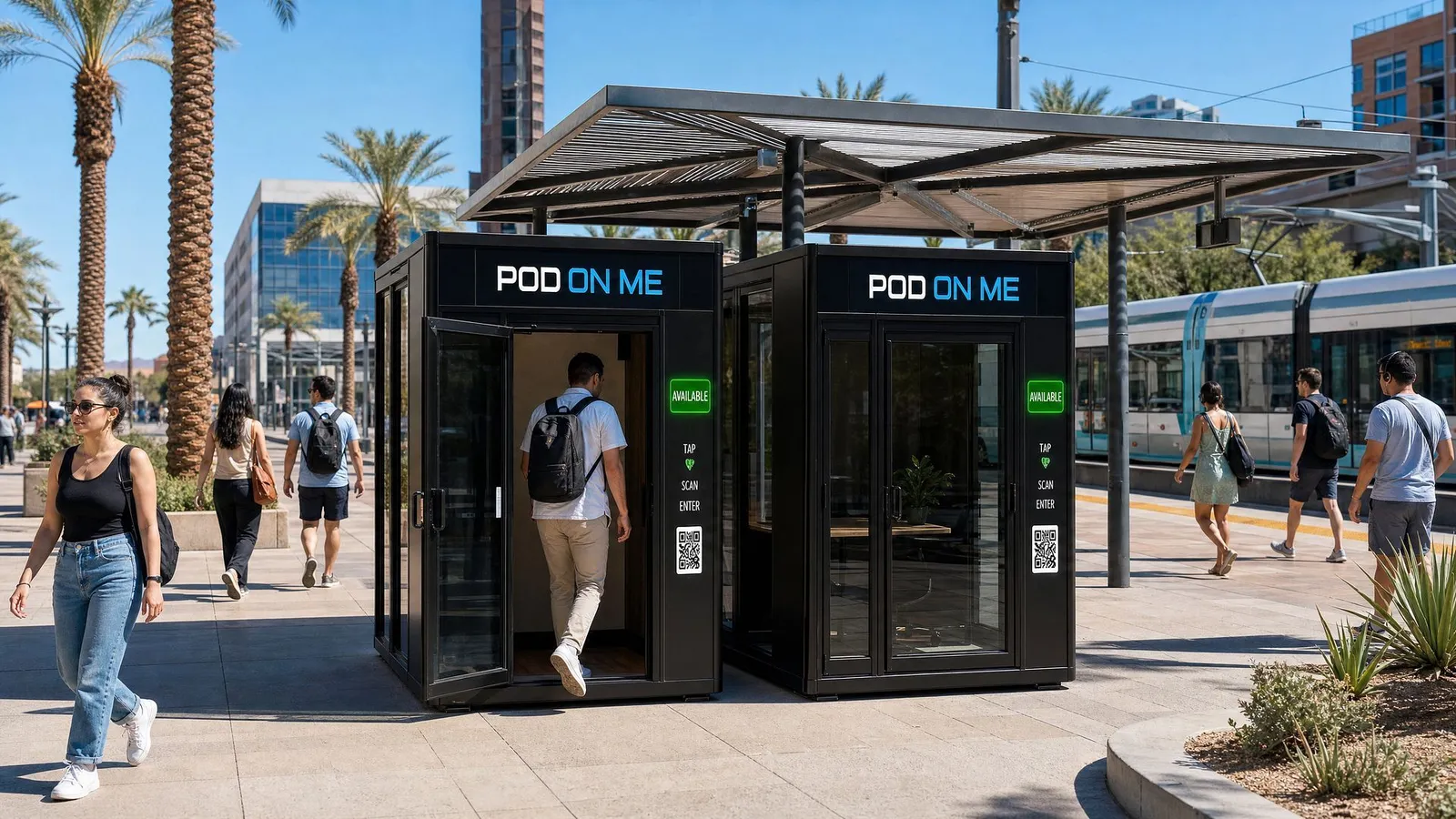
The part you never see does most of the work: a smart lock tied to your booking, a tap-to-pay terminal, the exterior status screen, occupancy and air-quality sensors, tamper and tilt alarms, GPS, and a controller that reports to our operations dashboard. That is what lets a pod run without staff on site.
One rebuild, 25 times
Every unit gets the same rebuild, so every pod looks, works and is serviced the same way. That repeatability is what turns 25 old kiosks into the start of a network rather than 25 one-off projects.